REVIEW · HO CHI MINH CITY
Mekong Delta Full Day Trip by Speedboat with Leisure Biking
Book on Viator →Operated by Fisheye Speed Boat Tour · Cu Chi Tunnels · Mekong Delta · Bookable on Viator
A speedboat day in the Delta beats most full-day tours. You get a round-trip river cruise with hotel transfers, then off-the-main-road time with bike and small-boat rides, plus a real lunch with local hosts. I especially liked the hands-on pace: market stop, temple visit, and the rice-wine family story that actually explains how it’s made. One drawback to plan for: this is a full day with moderate walking and time in the sun, so bring bug spray and good shoes.
The best part for me is the feeling that the day has a route, not just a collection of stops. A small group cap (15) helps the guide move you efficiently and keep the questions coming. If you’re sensitive to heat or bumpy rides on open boats, you’ll want to manage your expectations.
If you’re deciding between this and a do-it-yourself day, the price feels steep until you add it up: hotel pickup, English guide time, entrance fees, speedboat, and multiple local transport segments are bundled together.
In This Review
- Key highlights that make this day work
- Why a speedboat day on the Mekong is smarter than a bus
- Hotel pickup and the morning flow: how you start without stress
- Breakfast, refreshments, and comfort points you’ll actually notice
- Riversides, markets, and what to pay attention to
- Cao Dai temple stop: why this cultural break matters
- The rice-wine family visit: where the tour earns its keep
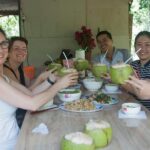
- Lunch at a family home: practical, filling, and not rushed
- Biking in the Delta: fun, but plan for real riding conditions
- Tuk-tuk and sampan rides: why the small boats change the view
- Pagoda time: a calm pause before the big “afternoon” portion
- Cu Chi tunnels paired with Mekong: a smart combo if you want both
- The $350 value check: what you pay for, and what that means on the ground
- Group size and guide quality: why the day feels smooth
- Who should book this (and who might skip it)
- Practical prep checklist before you go
- Should you book this Mekong Delta speedboat + biking day?
- FAQ
- How long is the Mekong Delta full day trip?
- What is the pickup area in Ho Chi Minh City?
- Where does the tour start and end?
- What time does the tour start?
- What rides and boat experiences are included?
- What meals are included?
- Is a vegetarian option available?
- Are entrance fees included?
- What should I bring for the day?
- Do I need good fitness for this tour?
Key highlights that make this day work
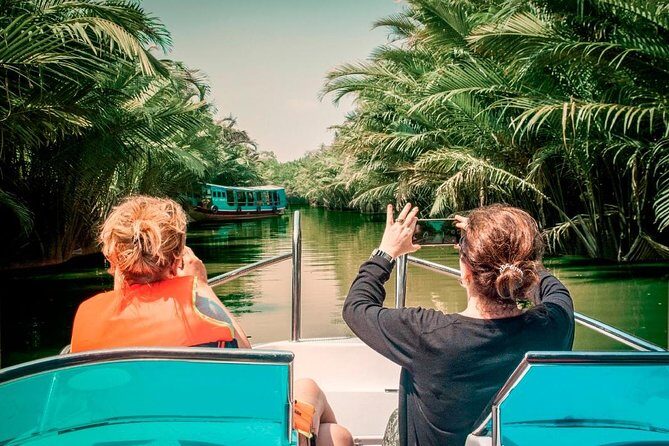
- Hotel transfers from District 1/3/4: no hunting for the pier on your own.
- Speedboat round-trip: you spend more time cruising the waterways and less time stuck in traffic.
- Rice-wine workshop visit: you see the brewing process with a family, not just a quick photo stop.
- Multi-vehicle touring: bike + tuk-tuk + sampan rolling boat keeps the day from feeling repetitive.
- Lunch at a family home: it’s not a generic buffet stop.
- Guide energy stands out: names like Den, Qui, and JP (John Paul) show up repeatedly in strong feedback for humor, clear English, and smooth pacing.
Why a speedboat day on the Mekong is smarter than a bus
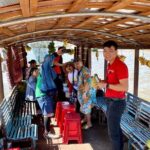
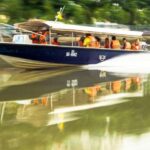
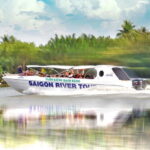
Ho Chi Minh City is loud, fast, and very not-a-river-town. So the trick for a great Mekong day is getting you onto the water quickly—and keeping you there. This trip uses a round-trip speedboat, so you’re not spending your limited vacation hours negotiating taxis or sitting on a long haul ride.
On the river, you also get better timing. The day is built so you’re moving between sights with planned transport, rather than waiting around for the next ride. That matters in the Delta, where schedules can get stretched if you’re trying to coordinate boats yourself.
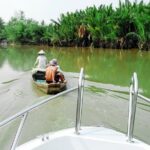
The “speedboat + local rides” mix is also practical. You cruise the wider waterways on a boat designed for comfort, then switch to smaller transport when you want to get closer to canals, villages, and the daily routine along the banks. The result is variety without feeling chaotic.
Other Mekong Delta day trips we've reviewed

Hotel pickup and the morning flow: how you start without stress
Your morning starts with pickup from central areas in District 1, 3, and 4. That removes the biggest annoyance for most Mekong plans: getting to the pier at Bạch Đằng—Tôn Đức Thắng area (meeting point listed at Ga Tàu Thuỷ Bạch Đằng – Tôn Đức Thắng – Phường Bến Nghé, District 1).
The schedule is set so you’re typically collected around 7:30 AM, with the activity starting around 8:00 AM at the meeting point. Even if you’re not early-morning-joy type, hotel pickup helps you avoid that stressful moment where you’re asking someone to confirm the pier location.
Also, this is built for a full-day rhythm. You’re not dragging the day out with long gaps. That means you’ll likely feel more satisfied by the time you’re back in the city.
Breakfast, refreshments, and comfort points you’ll actually notice
Included meals aren’t just “nice to have” here. You get a light breakfast and a full local home lunch. You also receive mineral water, cool towel, and tropical fruits during the day.
That matters because the Delta can be hot and sticky, especially if you’re biking or walking near the waterline. Having water and a cool towel provided means you can spend your energy enjoying things instead of hunting for a shop every time you feel overheated.
One more comfort detail: you’re moving between boats and vehicles. Without bottled water and those small cooling items, the day can feel more exhausting than it needs to.
Riversides, markets, and what to pay attention to
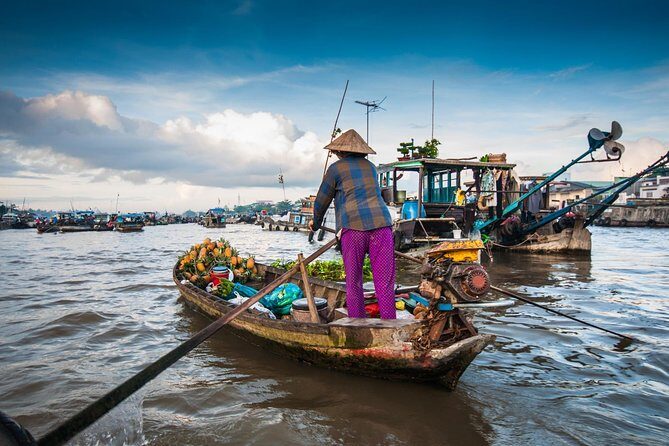
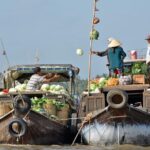
A key early stop is a local riverside market. This is one of those places where the point isn’t just seeing stalls—it’s noticing how life is arranged around the water. You’ll see how people trade, move goods, and use the river as a working highway.
When you’re there, I’d focus on three things:
- How vendors package and move items quickly.
- How the market fits into daily routines, not tourist hours.
- The different boats and handoffs people rely on.
It’s easy to treat markets as a quick photo stop. On a tour like this, you can do better: ask your guide what goods people are buying and where the products are heading next.
Cao Dai temple stop: why this cultural break matters
The itinerary includes a stop at a Cao Đài temple on the way through the day. Cao Đài is one of Vietnam’s distinctive religious movements, and the stop works as a mental reset from purely river-and-market time.
I like this kind of “context” stop on day trips. Mekong tours sometimes focus only on landscapes and boats. A temple adds contrast and gives you something to interpret while you’re traveling. It also breaks up the day before you move into the more hands-on, family-based visits.
If you’re short on cultural curiosity during trips, consider this your push toward understanding daily belief systems beyond the history sound bites.
Other Mekong speedboat tours we've reviewed
The rice-wine family visit: where the tour earns its keep
One of the strongest highlights is a visit with a local family who crafts traditional rice wine. You don’t just watch from a distance. You learn about the brewing process and (based on strong feedback from past participants) you can enjoy tastings as part of the experience.
This is valuable for two reasons:
- It’s specific. Rice wine isn’t one of those generic souvenirs. It’s tied to local production and routine.
- It’s personal. Families doing the work themselves means you’re seeing the human scale of craft, not just a performance.
If you’re the type who likes food and drink stories, this is the stop that turns the Mekong from scenery into understanding.
Lunch at a family home: practical, filling, and not rushed
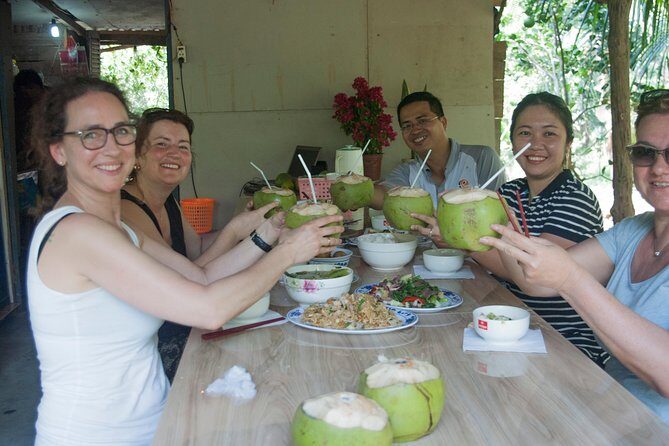
After the morning activities, you get lunch aboard the day’s route. This trip includes lunch at a family home, which is a big deal compared with standard packaged tours that feed you at whatever restaurant is closest.
A home lunch typically means:
- You’ll eat something more local than what you’d pick randomly in a city neighborhood.
- The meal aligns with the family’s daily life rather than a timed kitchen.
- You often get a more relaxed pace for conversation.
Even if you don’t speak the language, you can still ask basic questions through your guide. What ingredients are local? How often do they make it? What does the work look like in different seasons?
Vegetarian option is available, and you should request it when booking. A surcharge may apply for special meal arrangements, so don’t assume it’s automatic.
Biking in the Delta: fun, but plan for real riding conditions
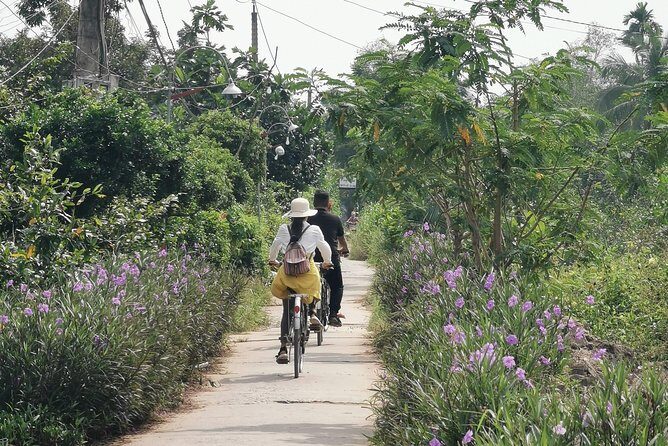
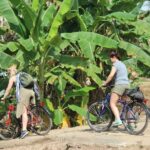
The tour includes a leisure bicycle ride along a countryside trail. This is one of those experiences that feels light on paper and more real once you’re there.
A few practical notes:
- Wear comfortable shoes. You’ll likely be walking before and after the bike time.
- Use sunscreen and bug repellent. The trail near waterways can make sun and insects feel worse than you expect.
- Bring sunglasses. You’ll get glare from water.
You also need to know about the biking support: a motorbike driver backup is available, but you must inform the operator in advance. That detail is important. It means the company plans for different comfort levels—but you need to communicate ahead of time so they can match you with the right setup.
In some feedback, people mention electric-assist bikes or scooter-style transport for the village riding portion. The core point for you is simpler: the day isn’t just walking; it includes a ride that helps you see more ground without burning your whole day in transit.
Tuk-tuk and sampan rides: why the small boats change the view
The day isn’t only speedboat cruising. You’ll also use:
- A xe-loi tuk-tuk (local three-wheeler-style transport)
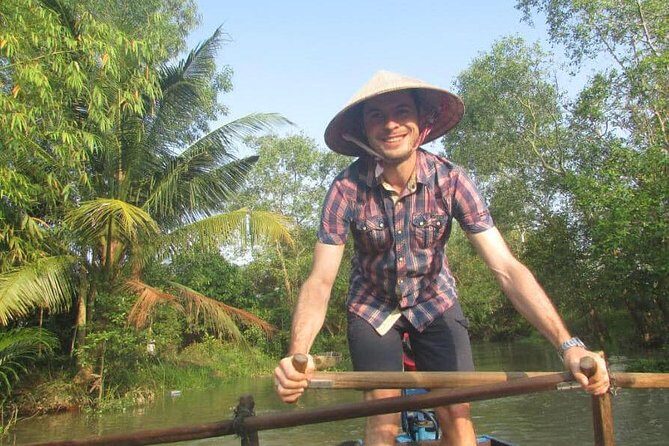
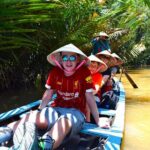
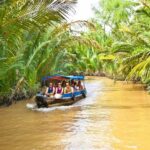
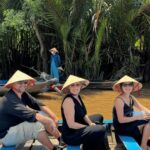
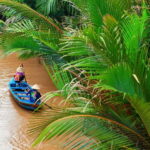
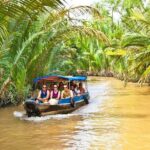
- A sampan rolling boat for smaller water routes
This matters because the Delta isn’t one type of water. Some stretches are wide enough for a speedboat. Other stretches are narrow, slow, and perfect for smaller boats and simple landings. That’s where you feel the Delta’s rhythm.
On the tuk-tuk and sampan segments, you usually get closer to what’s happening—houses, work areas, and the canals connecting villages. It’s also where a guide helps you interpret what you’re seeing, instead of just getting dropped at random corners.
Pagoda time: a calm pause before the big “afternoon” portion
The itinerary also includes a stop at a Buddhist pagoda. Even though the exact details in the provided text are cut off mid-sentence, the function of the stop is clear: it gives you a quieter moment after the market and family workshop time.
On a day trip that covers multiple activities, a calmer site visit helps the rest of the tour land better. You’ll likely appreciate it more if you take a slow moment instead of treating it like another checklist stop.
Cu Chi tunnels paired with Mekong: a smart combo if you want both
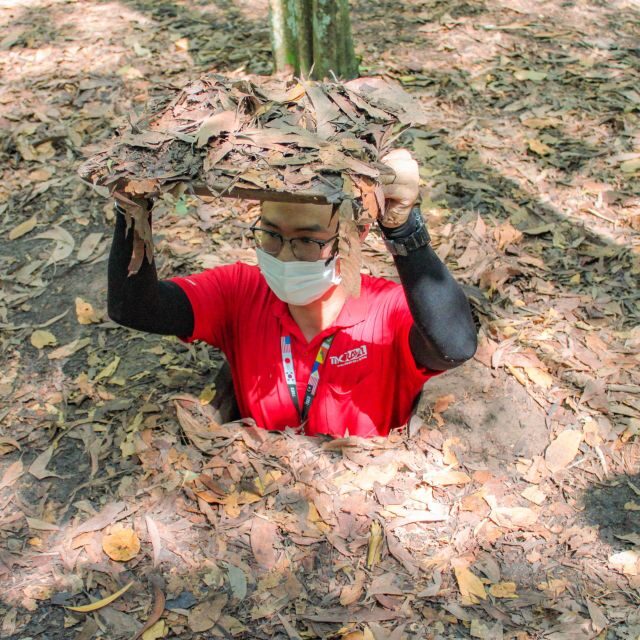
The experience provider is listed with Cu Chi tunnels in addition to the Mekong Delta. In past feedback, people describe doing Mekong Delta earlier and then heading to Cu Chi tunnels later, often noting it can feel a bit less crowded in the afternoon.
Why this pairing can work for you:
- You get “everyday life on the river” in the morning.
- Then you switch to a very different Vietnam topic afterward.
- The day becomes a full story arc instead of only scenery and food.
The main caution is mental stamina. It’s a lot to do in one day—two very different kinds of experiences. If you’re the type who gets tired after intense visits, go into it with water, snacks between meals if allowed by your guide, and a plan to take breaks when offered.
The $350 value check: what you pay for, and what that means on the ground
At $350, this isn’t a budget day trip. But for your money, you’re not just paying for a boat ticket.
You’re getting:
- Round-trip speedboat
- Hotel pickup and drop-off from central districts
- An English-speaking guide
- Entrance fees (included)
- Light breakfast and lunch
- Mineral water, cool towel, and tropical fruits
- Multiple transport modes: bike, xe-loi tuk-tuk, and sampan
So the real value isn’t only that it’s convenient. It’s that it bundles the expensive and time-consuming parts. If you tried to replicate it yourself, you’d likely spend time (and taxis/boat coordination) stacking each segment separately—then pay more once you add entrance fees.
What you’ll still pay:
- Beverages (explicitly not included)
- Optional tips
If you want to spend your time seeing the Mekong instead of bargaining for transport and tickets, this pricing makes more sense.
Group size and guide quality: why the day feels smooth
The group limit is 15 travelers. That’s small enough to keep things personal, especially for a day with multiple handoffs between vehicles.
Guide quality shows up hard in feedback. Names like Den, Qui, and JP (John Paul) get mentioned for fluent English, humor, and good memory for the day’s moments (including photo help). That’s not fluff. In practice, a strong guide makes it easier to:
- Ask questions at the right times
- Understand what you’re seeing at markets, temples, and workshops
- Keep the itinerary moving without stress
If you’re traveling with friends or family, this size also tends to feel more organized than large bus groups.
Who should book this (and who might skip it)
This tour is a good fit if you:
- Want a full day with structure but not a rigid, all-bus experience
- Like markets, food stories, and small cultural stops
- Are comfortable with moderate walking and at least some biking
- Prefer having a guide handle entrances and transport segments
I’d think twice if you:
- Have mobility limits that make stairs, uneven ground, or boat transfers uncomfortable
- Know you get motion-sick on open boats or during constant vehicle changes
- Hate sun exposure and heat without much tolerance
It’s not an extreme tour, but it’s active enough that preparation matters.
Practical prep checklist before you go
Pack like you’re going to be outside for most of the day.
Bring:
- Sunglasses and sunscreen
- Mosquito repellent
- Comfortable walking shoes
- A camera (you’ll have plenty of water-and-life moments)
Use the bike support option if you need it. If you want motorbike backup during the ride, tell the operator in advance so they can arrange it.
And one small mindset tip: the best photos usually come when you slow down and watch how people live, not when you just sprint for the next photo angle.
Should you book this Mekong Delta speedboat + biking day?
Yes—if you want one Mekong day that’s organized, varied, and heavy on local texture. The speedboat round-trip, included meals, multiple transport modes, and the rice-wine family stop are the ingredients that make it feel worth the price for many people.
I’d book it sooner rather than later if:
- You’re short on time in Ho Chi Minh City
- You want hotel transfers and entrance fees handled
- You enjoy guided storytelling, not just sitting in transit
I’d consider a different option if you’re mainly chasing a low-effort day, or if you’re worried about biking comfort and heat. But if you’re willing to dress for sun and take the day at a steady pace, this is a strong way to spend your one full day.
FAQ
How long is the Mekong Delta full day trip?
It runs about 7 to 8 hours.
What is the pickup area in Ho Chi Minh City?
Pickup is offered from central locations in District 1, 3, and 4.
Where does the tour start and end?
It starts at Ga Tàu Thuỷ Bạch Đằng – Tôn Đức Thắng – Phường Bến Nghé (District 1) and ends back at the meeting point.
What time does the tour start?
The start time is listed as 8:00 am.
What rides and boat experiences are included?
You get a round-trip speedboat, plus biking, a xe-loi (tuk-tuk) ride, and a sampan rolling boat segment.
What meals are included?
You’ll have a light breakfast and a local home lunch.
Is a vegetarian option available?
Yes, a vegetarian option is available. You should request it at booking, and a surcharge may apply for special meal accommodations.
Are entrance fees included?
Yes, all entrance fees are included.
What should I bring for the day?
Bring sunglasses, sunscreen, mosquito repellent, comfortable walking shoes, and a camera.
Do I need good fitness for this tour?
It’s listed as moderate physical fitness. The itinerary includes walking and a leisure bike ride.