REVIEW · BEN TRE
HCMC: Mekong Delta 2-Days My Tho–Ben Tre & Cai Rang Market
Book on GetYourGuide →Operated by Saudyha Travel · Bookable on GetYourGuide
Mekong Delta tours can feel scripted fast. This one is built around a solid mix of big-name sights (Vinh Trang Pagoda) and slow, hands-on river time (sampan rides through coconut canals). I also like that you get a proper hotel in Can Tho and a packed second day that includes the dawn Cai Rang floating market. The main drawback to consider is that some people feel the trip turns into a bit of a money-push, including aggressive tip requests and an animal photo stop reported by one reviewer.
Day 1 keeps the pace friendly: My Tho boat time, Lan Island village walking, honey-lemon tea, seasonal fruit, and then a riverside set-menu lunch. After lunch, you get real downtime options—hammock time, village paths, or an optional bike ride—so it’s not just transport followed by another photo line. The other consideration is crowding: a couple of reviews describe it as mass-touristic, so if you hate group logistics, go in with your expectations set.
Still, for the price, there’s a lot to like. You’re paying for a full day of transportation from Ho Chi Minh City, guided stops, boat rides on two different rivers, and a dinner cruise on Can Tho River with Don Ca Tài Tử folk music. If you want a calm, self-guided kind of Mekong experience, you might find this schedule a little too structured.
In This Review
- Key things to know before you go
- Price and what you actually get for $78
- Day 1: From HCMC to My Tho, Ben Tre, and back with riverside rhythm
- Thới Sơn (Lan) Island: honey-lemon tea and Đờn Ca Tài Tử
- Coconut candy workshop: watch how it’s made, decide if you buy
- The afternoon in My Tho: downtime that can save the day
- Day 2: Cai Rang at dawn, noodle-making, and My Khanh’s gardens
- Trúc Lâm Phương Nam Zen Monastery and the Purple House stop
- Dinner cruise on Can Tho River with Don Ca Tài Tử
- Guide quality, vegetarian meals, and why names matter
- Ethics, crowds, and the sales-push question
- Who should book this Mekong Delta 2-day tour
- Should you book? My practical take
- FAQ
- What time does the tour pick you up in Ho Chi Minh City?
- Where does the tour take you on Day 1?
- Do you visit Cai Rang Floating Market?
- Is lunch included, and what kind of lunch is it?
- Are there any free-time options after lunch on Day 1?
- Do you get to take boats on both days?
- Are meals vegetarian-friendly?
- Is Trúc Lâm Phương Nam Zen Monastery included?
- Is there any self-paid stop on the itinerary?
Key things to know before you go
- Vinh Trang Pagoda and the Four Sacred Islets: a classic start, plus Tien River scenery with Long, Lan, Qui, Phung.
- Sampan time in palm-and-coconut canals: this is the slow, scenic segment most people remember.
- Village stop on Thới Sơn (Lan) Island: tea, fruit, and Đờn Ca Tài Tử folk music in a small-community setting.
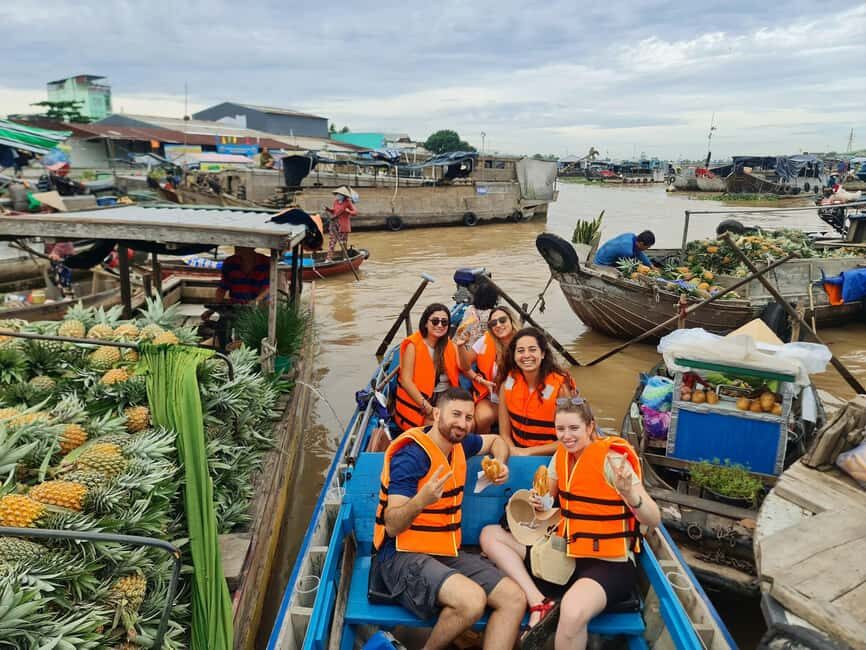
- Cai Rang floating market at dawn: go early for the energy and boat activity you actually came for.
- My Khanh Ecotourism Village and Trúc Lâm Phương Nam Monastery: gardens, a 100-year-old house, and a major Zen temple.
- Watch the ethical flags: one review reports a python used as a photo prop in a tiny cage.
Price and what you actually get for $78
This tour is priced at $78 per person for two days, and the value comes from what’s bundled, not from single attractions. You’re not just seeing one site; you’re moving through My Tho and Ben Tre on one day, then transitioning to Can Tho for dawn market time and a temple-and-gardens afternoon.
You also get a hotel stay in Can Tho (city center), an English-speaking guide, and meals listed as L/D. That matters because in the Mekong, getting from A to B can eat hours, and hours are the expensive part of most day-trip tours.
One caution on value: a couple of reviews mention a sales-focused feel and pushy tipping. If that type of pressure would bother you, the itinerary might feel more expensive than the ticket price suggests.
If you're still narrowing it down, here are other tours in Ben Tre we've reviewed.
Day 1: From HCMC to My Tho, Ben Tre, and back with riverside rhythm
You start with pickup from your hotel area near Bến Thành Market, typically between 07:30 and 08:30. A short stop at the Mekong Rest Stop gives you a restroom break and a chance for snacks before the day really begins.
Then it’s straight to Vĩnh Tràng Pagoda, an important Southern Vietnam religious site built in the 19th century by Mr. and Mrs. Bùi Công Đạt. What I like about this stop is the architecture contrast: you’ll see a blend of Asian and European design elements, which feels visually different from what most people expect.
From there, you head to the My Tho cruise port and board a boat on the Tiền River. As you ride past the Four Sacred Islets—Long (Dragon), Lan (Unicorn), Qui (Turtle), Phung (Phoenix)—you also pass floating fish farms and the well-known Rạch Mieu Bridge.
This part is not about getting off the boat. It’s about orientation—seeing what the Lower Mekong looks like when the river is the main road.
Thới Sơn (Lan) Island: honey-lemon tea and Đờn Ca Tài Tử
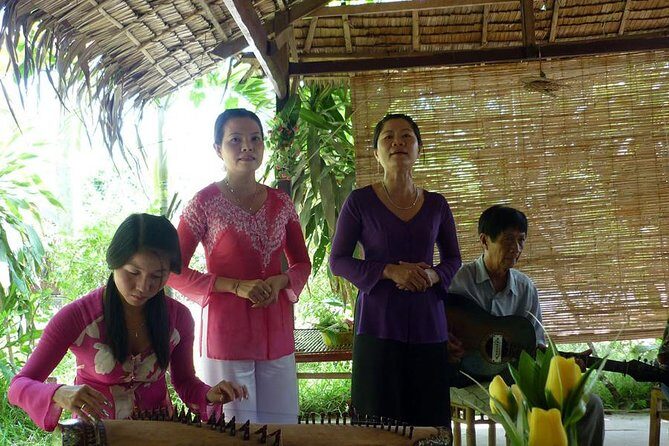
Next comes Thới Sơn (Lan) Island, where you get a village-style walk through paths, local houses, and fruit gardens. You’ll be offered honey lemon tea and fresh tropical fruit, and the stop often includes Đờn Ca Tài Tử Southern folk music.
I like this segment because it’s not only about posing near water. Even if it’s still a tourist itinerary, it’s anchored in local routines—tea, fruit, and traditional music—so the experience feels more human than it does commercial.
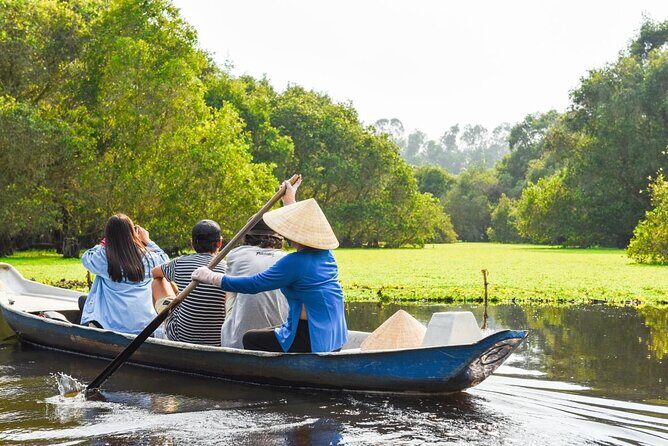
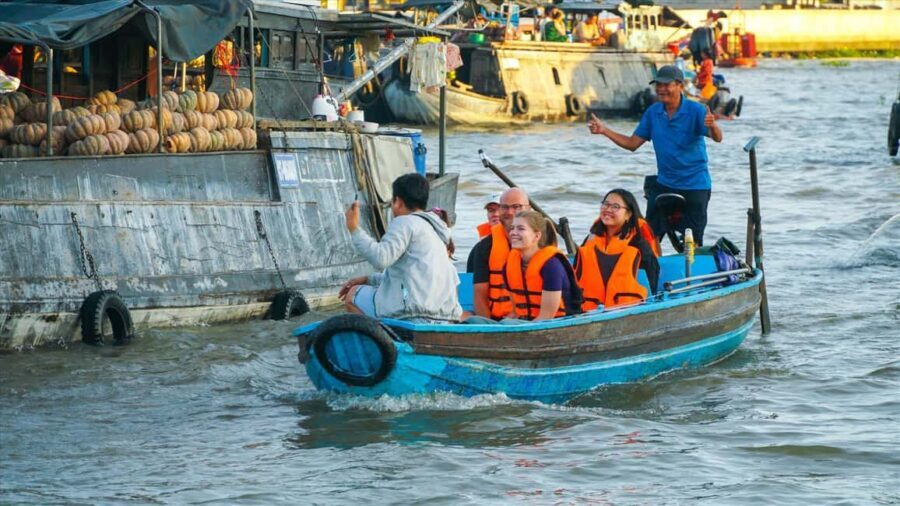
After the island time, you switch from a walking pace to the narrow waterways. You’ll take rowing boats through coconut-lined canals, which is where the Mekong finally slows down in a way that feels different from big river cruising.
Coconut candy workshop: watch how it’s made, decide if you buy
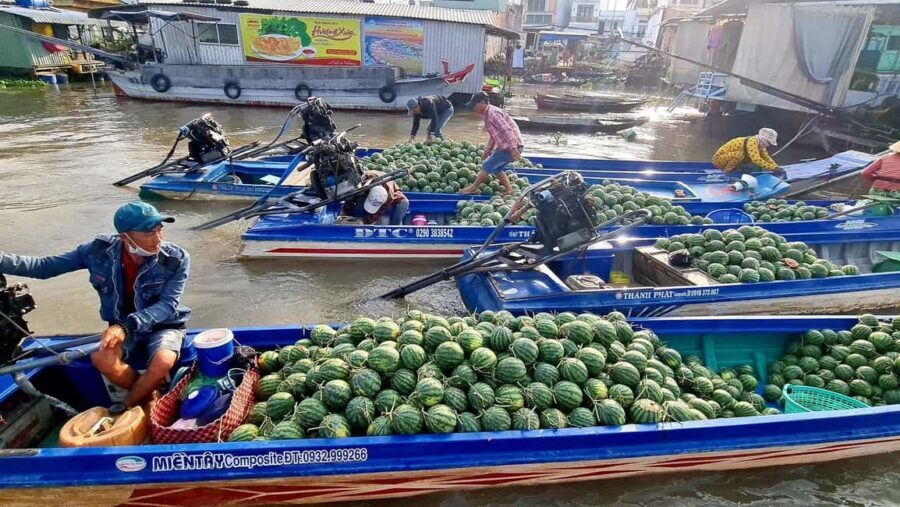
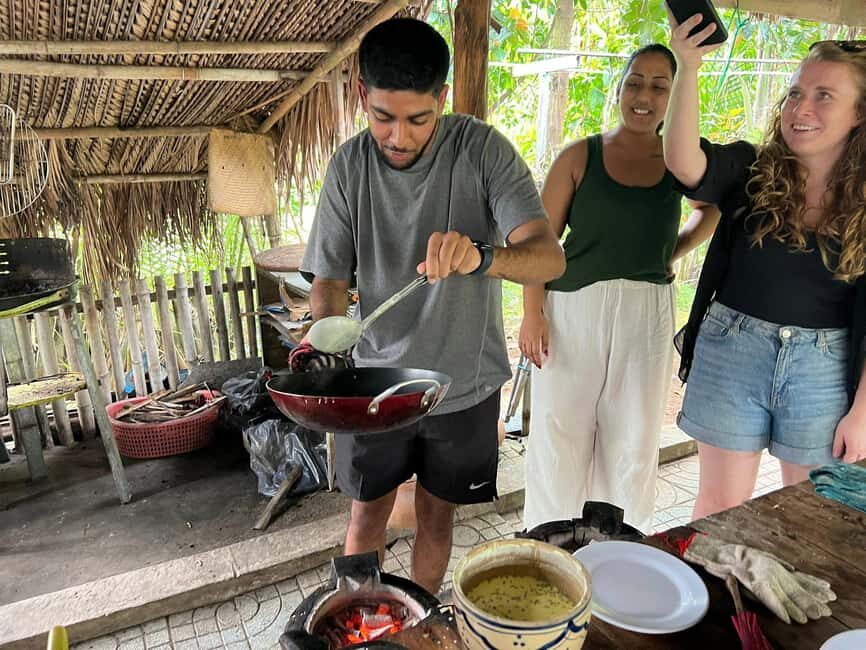
Midday, you’ll visit a coconut candy workshop, where you learn how locals make sweets and coconut-based handicrafts. This is one of those stops that can be either fun or frustrating depending on your personality.
If you enjoy watching food craft processes, you’ll likely appreciate the explanation and hands-on feel. If you dislike being steered toward purchases, go in with a simple plan: watch what’s happening, then decide afterward whether anything fits your budget.
After that, you sit down for a set-menu lunch at a local riverside restaurant. This is a real break from water movement, and the fact that it’s in a garden-type setting matters—it gives you shade and breathing room before the next transport jump.
The afternoon in My Tho: downtime that can save the day
After lunch, you get flexible downtime options, which is rare in tightly scheduled tours. You can relax in a hammock, fish for crocodiles, cross the monkey bridge, or take a leisurely bike ride through the village.
This is also where you can control how intense the day feels. If the group energy gets too much, choose the slower option—hammock or walking paths—and let the river do the talking.
Around 14:30, you return to My Tho by boat and then transfer by bus to Can Tho, roughly 2–3 hours. Expect check-in at a hotel in the city center, so you’re not stuck far out when you wake up the next morning.
Other My Tho tours we've reviewed
Day 2: Cai Rang at dawn, noodle-making, and My Khanh’s gardens
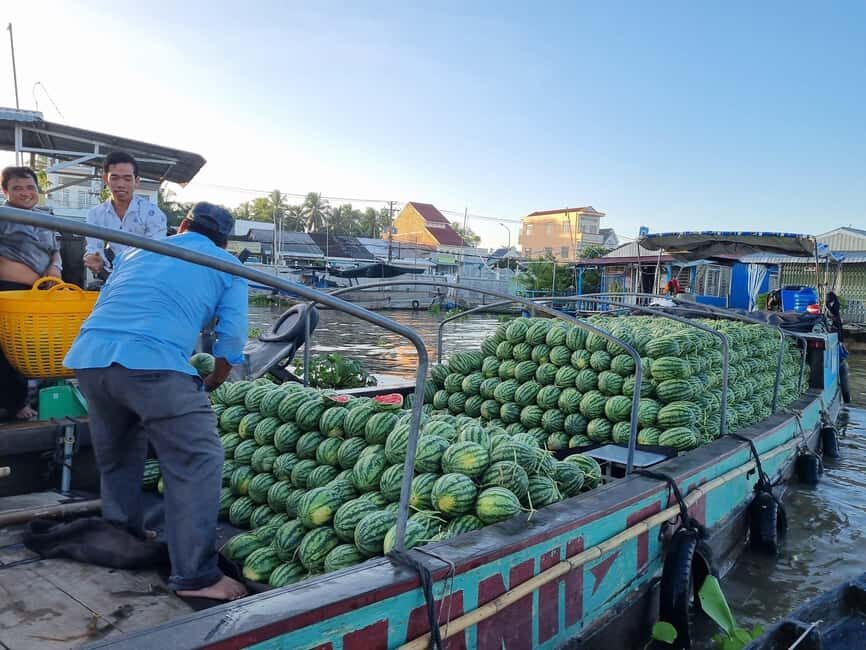
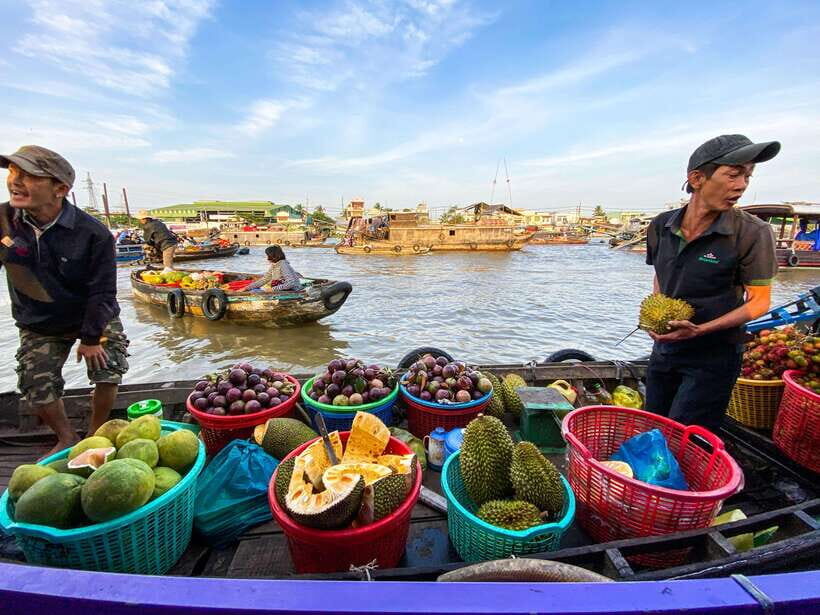
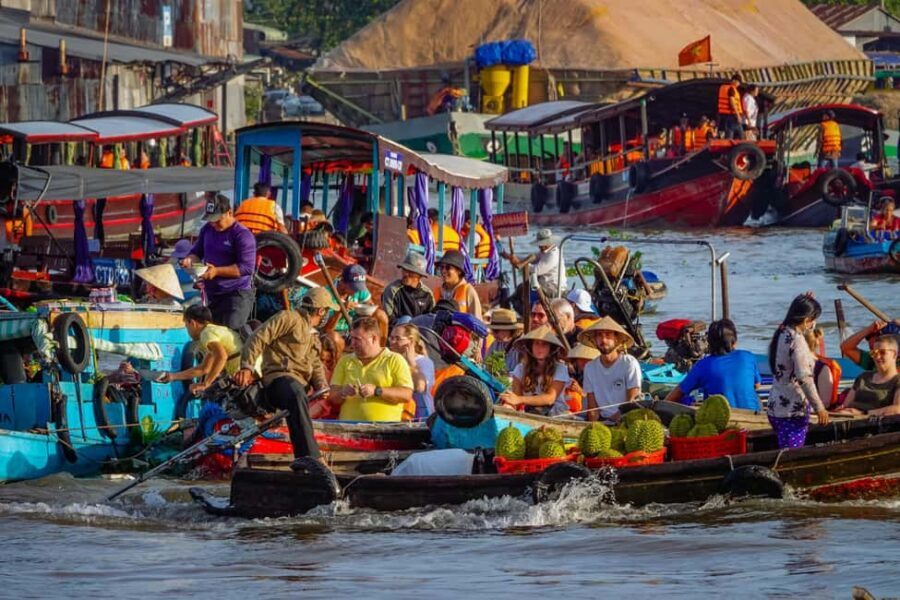
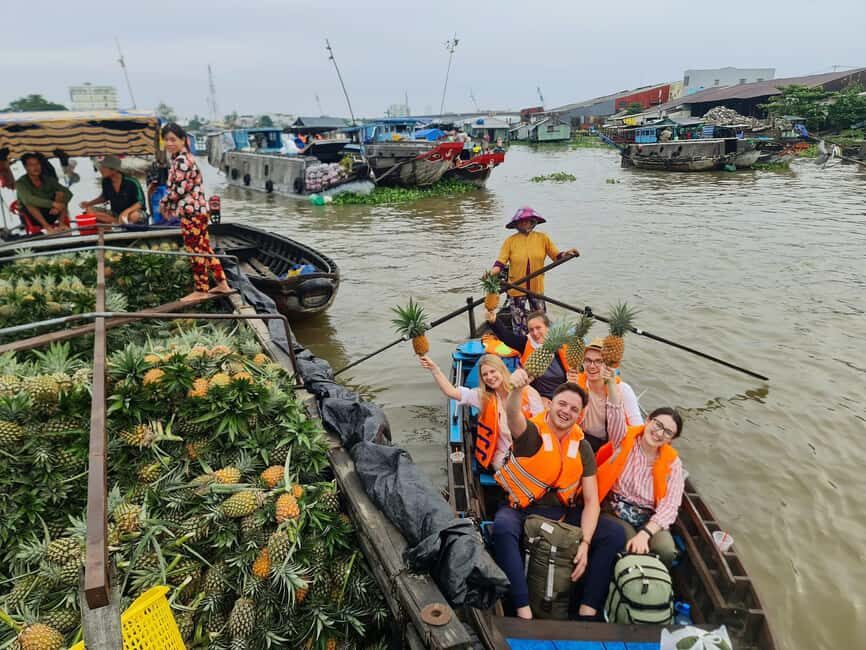
Breakfast is around 07:30, then you head to Ninh Kiều Wharf for the Can Tho River cruise. The best part of this morning is timing: Cai Răng floating market is visited in the early hours, when boats and fruit activity are at their most lively.
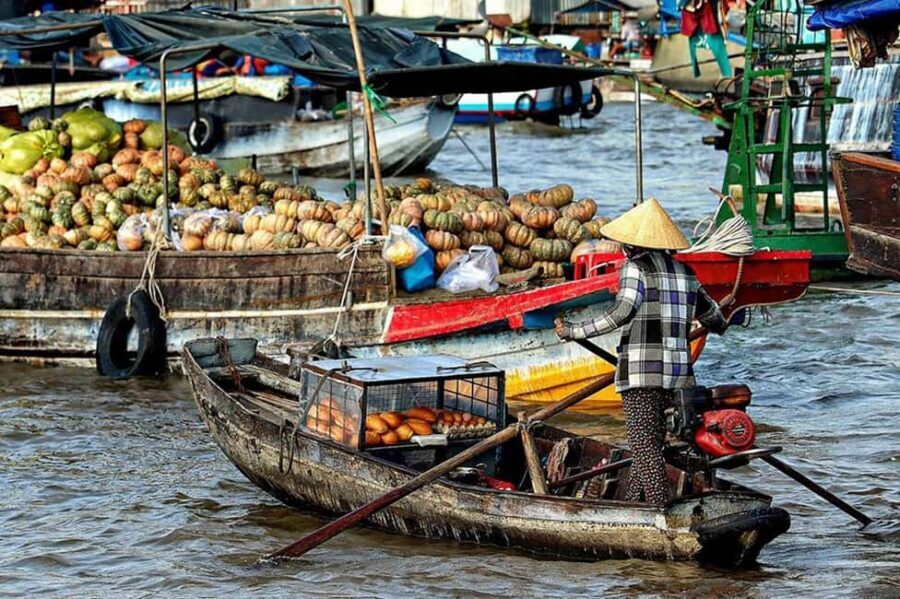
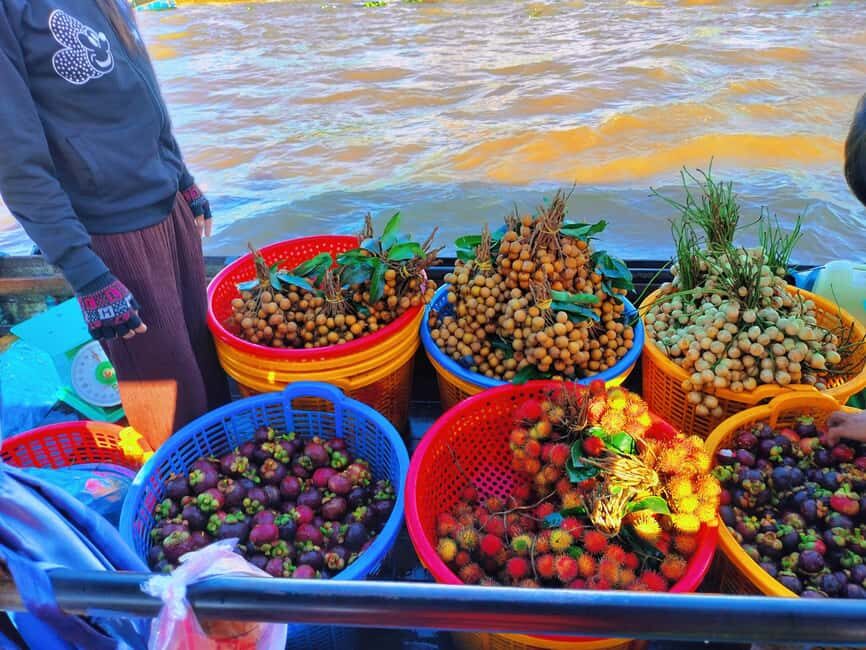
Cai Răng is famous for a reason. You’ll see vendors selling fruits and goods directly from boats, and you get the best view when you’re not arriving too late and everything is already winding down.
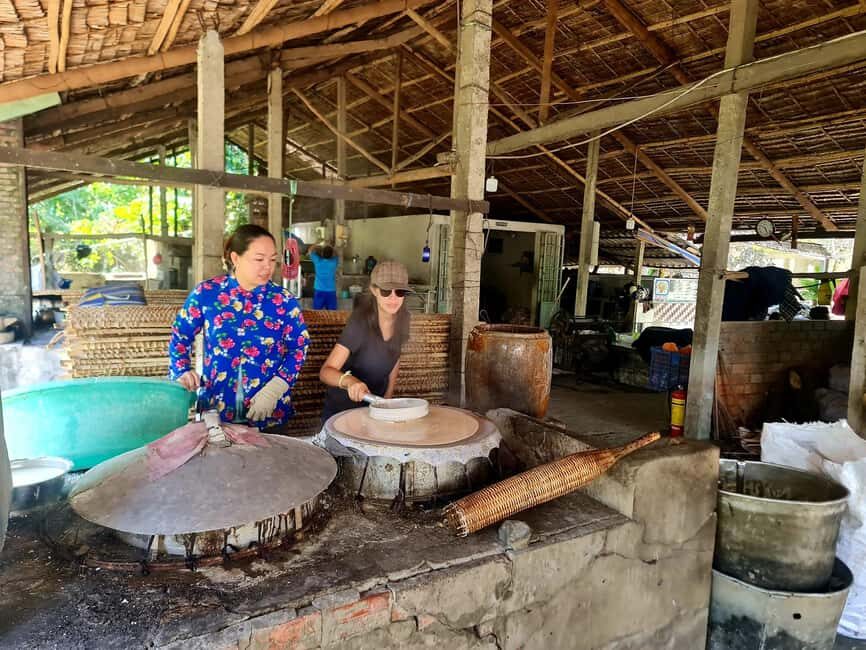
After the market, there’s a traditional noodle-making workshop, where you watch locals craft rice noodles by hand. This is the kind of activity that feels small on paper, but it’s useful because it turns food from something you consume into something you understand.
Then you move to Mỹ Khánh Ecotourism Village, where you visit fruit gardens, a 100-year-old ancient house, and flower gardens. I like the mix here: you get scenery, history-by-experience (the old house), and a calmer pace than the floating market.
Trúc Lâm Phương Nam Zen Monastery and the Purple House stop
In the afternoon, the itinerary includes Trúc Lâm Phương Nam Zen Monastery, one of the largest Buddhist temples in the Mekong Delta. It’s built in the architectural style of the Lý–Trần dynasties, which helps it feel “designed” rather than just functional.
This stop gives you a different mood from the river chaos of Cai Răng. It’s also a good break if you want a moment of quiet, even inside a group schedule.
Next is Purple House Coffee & Film Studio, with entrance described as self-paid. Think of it as an optional add-on: if you like coffee stops and film-themed places, it can be a fun reset before the return ride.
You head back to Ho Chi Minh City in the afternoon and arrive around 17:30, with drop-offs near Bến Thành Market or Phạm Ngũ Lão Street.
Dinner cruise on Can Tho River with Don Ca Tài Tử
The highlights for this experience also include a Can Tho River dinner cruise with Don Ca Tài Tử folk music. This is Southern Vietnam’s classic musical tradition—more than background noise, it’s part of the cultural “why” of the Mekong region.
The practical thing to know is that your daylight schedule is already full. So if you’re picky about fatigue, plan to treat the dinner cruise as a nice wrap-up rather than a second sightseeing marathon.
If you care about music, this is the segment that tends to feel more memorable than another boat photo.
Guide quality, vegetarian meals, and why names matter
The guide is listed as English-speaking, and at least one review specifically praises a guide named Andy for being friendly and helpful with clear English. That’s not a small detail in Vietnam. When your guide can explain what you’re seeing and keep the group organized, the itinerary feels less frantic.
Meal handling also showed up in feedback. One person reported that a vegetarian request was accommodated and that the meals were varied and delicious. If you have dietary needs, this is reassuring—just make the request clearly at booking.
Ethics, crowds, and the sales-push question
This is the part you should not ignore.
One low-rated review said the tour felt overly focused on selling things, with only short time on canals and floating market. Another complaint was about aggressive push for tips, even described as money being taken directly from people’s hands.
A bigger ethical red flag came from a review that reported a python kept in a tiny cage and used as a photo prop. Even if you don’t plan to interact, you should decide in advance how you’ll handle it if it appears during the day.
It’s also worth noting the crowding concern. A couple of comments described the trip as overcrowded and mass-touristic, with locations feeling created for tourists. That doesn’t mean you won’t see real scenery, but it does mean your expectations should be about the balance: more “managed sightseeing” than “off-the-radar Mekong living.”
Who should book this Mekong Delta 2-day tour
I’d point this one toward you if you want a classic Lower Mekong highlights route in a short time. It’s especially good for first-timers who want Vĩnh Tràng Pagoda, a canal sampan ride, and Cai Răng Floating Market all without arranging transport yourself.
It also fits you if you like structured pacing with built-in breaks—like the hammock and free-time options after lunch. If you enjoy learning by watching (like noodle-making) and you value cultural stops (like Đờn Ca Tài Tử and Don Ca Tài Tử), this itinerary supports that.
I’d think twice if you hate sales pressure, dislike big groups, or strongly prefer ethical animal experiences. In that case, look for a tour with clearer boundaries around photography and tips, or consider a smaller-group alternative.
Should you book? My practical take
If you’re comfortable with a guided, scheduled Mekong experience and you mainly want the big sights—Vĩnh Tràng Pagoda, palm canals, and Cai Răng at dawn—this tour is a solid value. The included hotel in Can Tho and the two-river boat mix are the kind of efficiency you’re paying for at $78.
But if ethical concerns or aggressive tipping would ruin your trip, treat the negative feedback as a serious signal. I’d ask your booking channel whether the python photo stop is part of every departure, and I’d set a simple mindset: enjoy the boats and gardens, skip anything that feels wrong, and keep your spending choices on your terms.
FAQ
What time does the tour pick you up in Ho Chi Minh City?
Pickup is scheduled between 07:30 and 08:30 from hotels near Bến Thành Market.
Where does the tour take you on Day 1?
Day 1 runs from Ho Chi Minh City to My Tho and Ben Tre, then on to Can Tho, with stops including Vĩnh Tràng Pagoda, a boat on the Tiền River, Thới Sơn (Lan) Island, coconut canals, and a riverside lunch.
Do you visit Cai Rang Floating Market?
Yes. On Day 2 you board at Ninh Kiều Wharf and cruise along the Can Tho River to visit Cai Răng Floating Market at dawn.
Is lunch included, and what kind of lunch is it?
Lunch on Day 1 is a set-menu meal at a local riverside restaurant. Lunch on Day 2 is at My Khánh Tourist Village.
Are there any free-time options after lunch on Day 1?
Yes. After lunch you can relax in a hammock, fish for crocodiles, cross the monkey bridge, or choose a leisurely bike ride through the village.
Do you get to take boats on both days?
Yes. Day 1 includes a boat cruise on the Tiền River, plus rowing boats through narrow coconut canals. Day 2 includes a cruise on the Can Tho River to reach the floating market.
Are meals vegetarian-friendly?
One review states a vegetarian food request was accommodated, with meals described as varied and delicious.
Is Trúc Lâm Phương Nam Zen Monastery included?
Yes. It’s part of Day 2, after visiting My Khánh Ecotourism Village.
Is there any self-paid stop on the itinerary?
Yes. Purple House Coffee & Film Studio is listed as self-paid entrance.