REVIEW · HO CHI MINH CITY
Incredible Mekong Delta Tour 3-day from Ho Chi Minh City
Book on Viator →Operated by Asiana Link Travel · Bookable on Viator
Mekong Delta feels better when you slow down. This 3-day trip from Ho Chi Minh City helps you see the big highlights without doing trip math all day: My Tho river stops, Vinh Trang Temple, Cai Rang Floating Market, and the Trà Sư cajuput forest area. I like that your pickup, guide, and main activities are handled for you, and you still get time to wander instead of sprinting. One thing to consider: you’ll have early timing on day 2, plus a good amount of driving between regions.
The value is in the mix. You get motorboat and hand-rowed boat time, a bicycle ride, meals spread across the days, and a cooking class during the homestay night. I also like that the itinerary builds in breathing space, so you’re not stuck on the road all 3 days without breaks.
If you’re the type who hates schedules, this may feel a bit structured. And because it’s run as a private group experience, the pace and timing will be set to match the plan rather than your personal rhythm.
In This Review
- Key moments you’ll remember from this 3-day Mekong Delta tour
- How this Mekong Delta trip works in real life
- Day 1: My Tho riverside calm and Vinh Trang’s temple-meets-meal stop
- Day 1’s final leg: Can Tho transfer and your overnight setup
- Day 2: Cai Rang Floating Market early start and Trà Sư cajuput forest wildlife time
- Châu Đốc and Sam Mountain: one climb, big views
- Day 3: Border-town temples, then Cai Be lunch in a local home
- The “included” details that make this tour worth the money
- Price and logistics: is $467 per person a smart value?
- Who should book this Mekong Delta tour, and who might want a different plan
- Should you book this 3-day Mekong Delta tour from Ho Chi Minh City?
- FAQ
- FAQ
- What time is pickup in Ho Chi Minh City?
- How long is the Mekong Delta tour?
- Do you include hotel pickup and drop-off?
- Is the tour private or group-based?
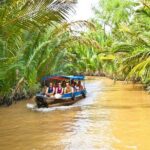
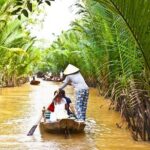
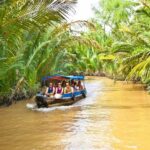
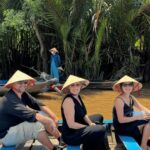
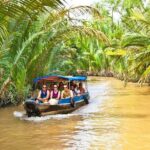
- What boat experiences are included?
- Are meals included?
- Is there a cooking class?
- Do you sleep at a homestay?
- What are the two overnight options?
- Are vegan or vegetarian options available?
- Do I need a passport?
Key moments you’ll remember from this 3-day Mekong Delta tour
- Cai Rang Floating Market by morning boat: colorful produce and boat-to-boat trading before the day gets too hot
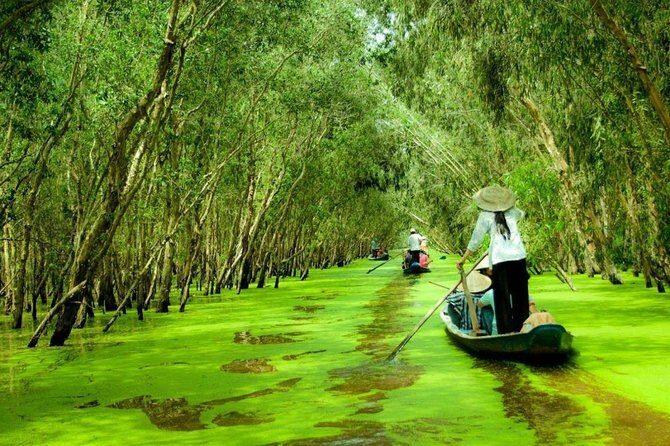
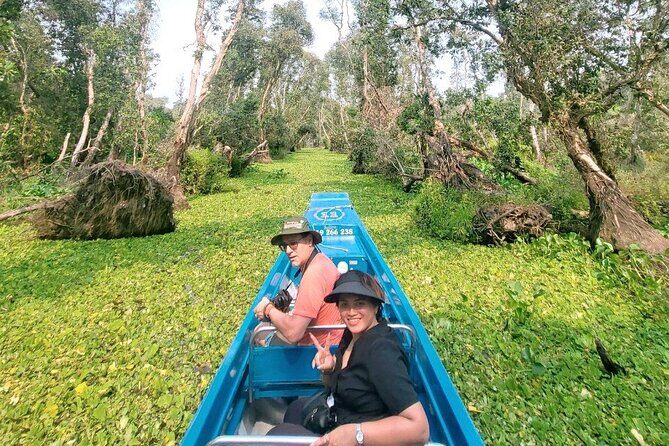
- Trà Sư (Cajuput forest) bird sanctuary area: wetlands and boardwalk-style nature time near the Cambodia border zone
- Vinh Trang Temple + a 5-course Vietnamese set menu: temple architecture, then a plated meal stop by the river
- Homestay night with cooking class: you’re not just watching, you’re participating
- Sam Mountain viewpoints near Châu Đốc: climb for wide views into the Cambodia direction
- Boat trips and a bicycle ride included: more than just a drive-by photo tour
How this Mekong Delta trip works in real life
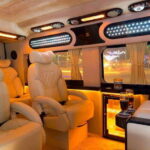
This tour is built to remove the headache of planning. You’re picked up from hotels around 8:30 a.m., then everything else is timed around transport and the day’s stops, with an air-conditioned car or minivan handling the longer stretches.
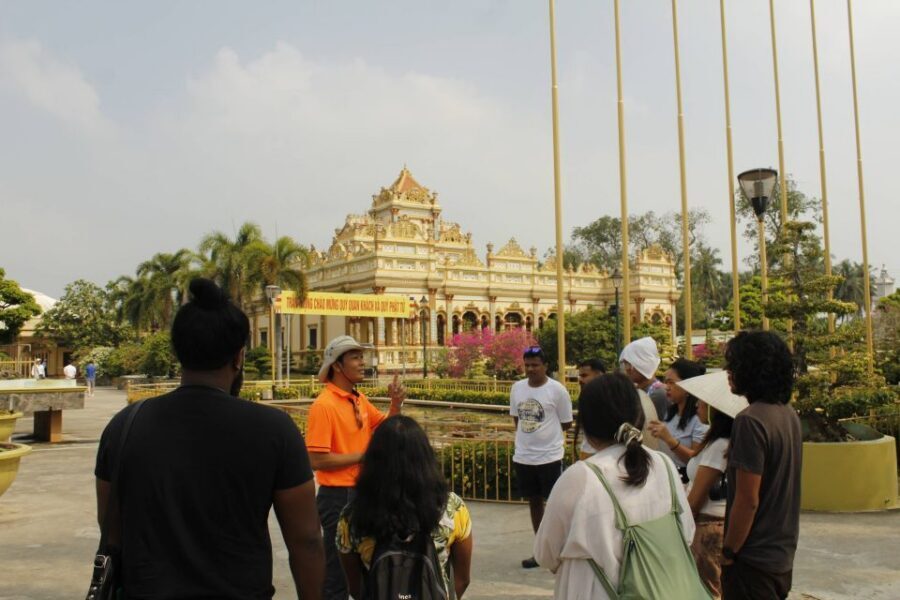
You travel with a Vietnamese and English-speaking guide, and that matters more than it sounds. When you hit places like floating markets or temple complexes, having someone explain what you’re seeing helps you avoid the common problem of walking around with no context. Plus, you’re not stuck arranging boats, meals, and check-ins on your own.
The other practical win: the tour includes overnight stays. You get 1 night at a homestay (2 guests per room) and 1 night at a 3-star hotel (2 guests per room). That’s a big deal if you’d otherwise have to coordinate where to sleep in the right region.
Other Mekong Delta tours from Ho Chi Minh City we've reviewed
Day 1: My Tho riverside calm and Vinh Trang’s temple-meets-meal stop
Day 1 starts with a 1.5-hour drive to My Tho, plus a short rest stop so you can stretch and use the restroom. Then you get about 3 hours in My Tho, which gives you time to get your bearings on the Mekong without rushing through everything.
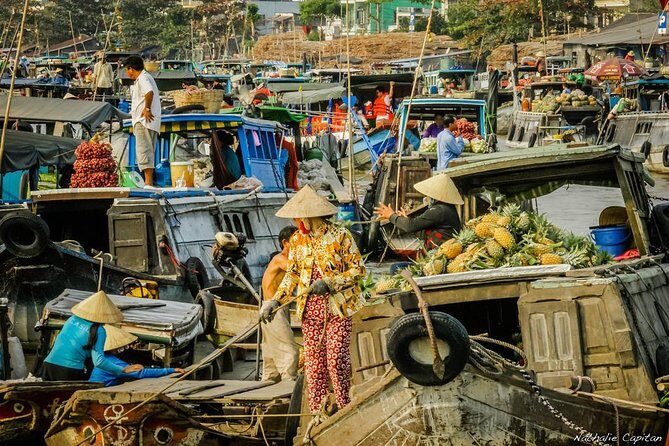
My Tho is your gentle introduction. Expect a river-and-greens vibe, plus a look at the area’s pagodas and calm waterways. This is a good day to loosen up your expectations: the Mekong isn’t one single “attraction.” It’s a working river system and a culture shaped by boats, markets, and daily life.
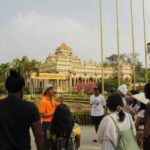
After that, you go to Vinh Trang Temple (about 1.5 hours). This is where the architecture is a standout: it’s known for blending Asian and European styles. So even if you’ve seen temples before, you’ll notice the mix.
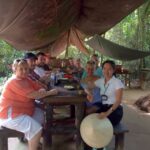
Then comes a very practical touch: a 5-course Vietnamese set menu at a riverside restaurant. This meal stop helps break up the day, and it’s included (just make sure you request any dietary needs in advance, since vegan/vegetarian options are available).
Day 1’s final leg: Can Tho transfer and your overnight setup
After lunch, you transfer about 2 hours to Can Tho and drop you at your accommodation. If you choose the rustic homestay option, dinner is served by your host. If you’re in the other accommodation option, your night plan is handled by the tour team—you just need to follow the instructions you receive at booking.
This part is worth caring about, because your next day starts early. A good night’s sleep (and a dinner you don’t have to chase around the city) makes day 2 easier.
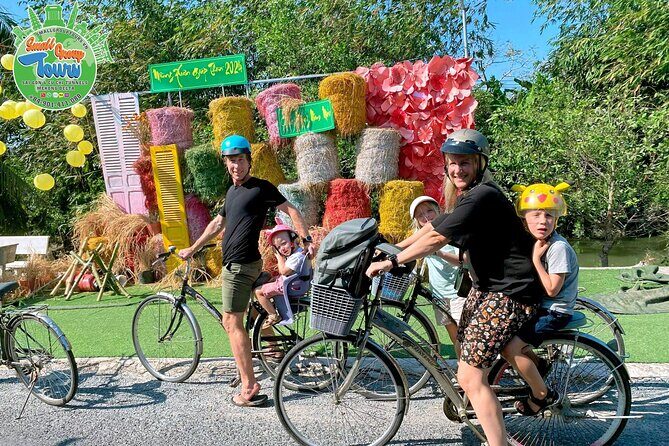
Also note the tour includes a bicycle ride somewhere in the program. You’ll want comfortable shoes and a mental switch from “city walking” to “river-area timing.”
Day 2: Cai Rang Floating Market early start and Trà Sư cajuput forest wildlife time
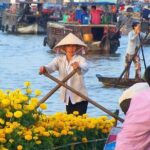
Day 2 is the one that often feels most “Mekong.” You start early, have breakfast, then take a motorboat to Cai Rang Floating Market. You spend about 4 hours here, and the market is known as the largest of its kind.
Going by boat is the key. Cai Rang isn’t meant to be watched only from a bridge. The trading activity happens right at water level, with colorful boats carrying fruits and vegetables. If you’ve only seen floating markets from Instagram angles, this is your chance to see how it actually works.
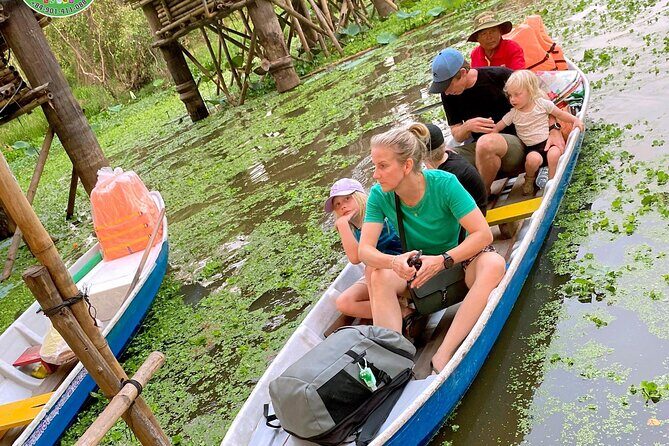
After Cai Rang, you head to Trà Sư Bird Sanctuary (also described as a cajuput forest area). It’s around 10 km from the Việt Nam–Cambodia border region, and it’s a national reserve. You spend about 4 hours there with admission included.
What I like about this stop is the pacing shift. Cai Rang is about people and commerce. Trà Sư is about wetlands and wildlife. If you’re trying to understand the Mekong Delta as more than “markets and boats,” this is where the broader nature side becomes clear.
Just keep in mind that nature stops can be weather-dependent. You’ll still get the program, but your comfort level will vary with heat and humidity.
Châu Đốc and Sam Mountain: one climb, big views
After Trà Sư, you drive to Châu Đốc border town. Lunch is served on the way, so you don’t lose half the afternoon searching for food.
Then you tackle Sam Mountain. You climb up for a short viewing break (about 30 minutes) and take in views into the Cambodia direction. Even though the time is limited, this stop adds a different angle to the trip. Instead of only water routes, you get a height-and-distance perspective.
You check into your hotel and then you have free evening time. That’s one of the calmer moments in the itinerary—worth using to reset, hydrate, and plan what you want to see without rushing.
Other city tours we've reviewed in Ho Chi Minh City
Day 3: Border-town temples, then Cai Be lunch in a local home
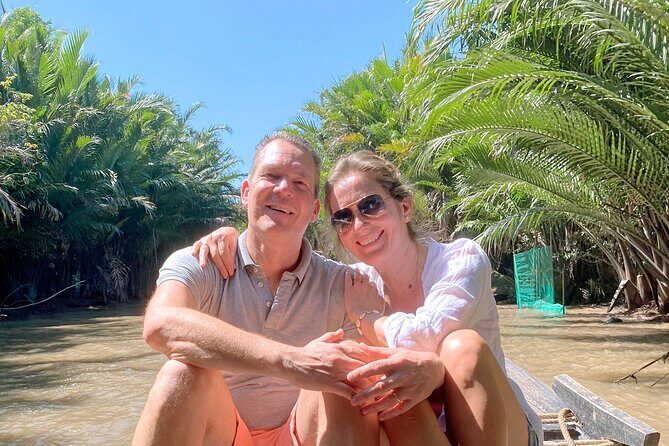
Day 3 starts with breakfast at your hotel, then you explore two cultural sites near Sam Mountain.
First is Ba Chúa Xu Temple (about 30 minutes). It was constructed in 1820 and is described as a protector goddess temple at the foot of Sam Mountain. Second is Thoại Ngọc Hầu Tomb, also known as Son Lang, an architectural work from the Nguyen Dynasty. This is also at the foot of the mountain and serves as a mausoleum and temple space.
Both stops are brief, but they matter because they show how the area’s spiritual life is tied to geography—mountain, border town, and daily routines.
After the temples, you leave Châu Đốc and drive back toward Ho Chi Minh City. Along the way, you stop in the Cai Be region for lunch at a local setting. The tour includes a meal in a home environment where the host showcases aspects of the food and cooking. This is one of the best moments to slow down and eat like a local rather than treating every meal as a quick stop.
You end back at the meeting point in Ho Chi Minh City.
The “included” details that make this tour worth the money
This is a tour where the fine print actually helps you on the ground.
You’re not just getting transportation. You’re getting:
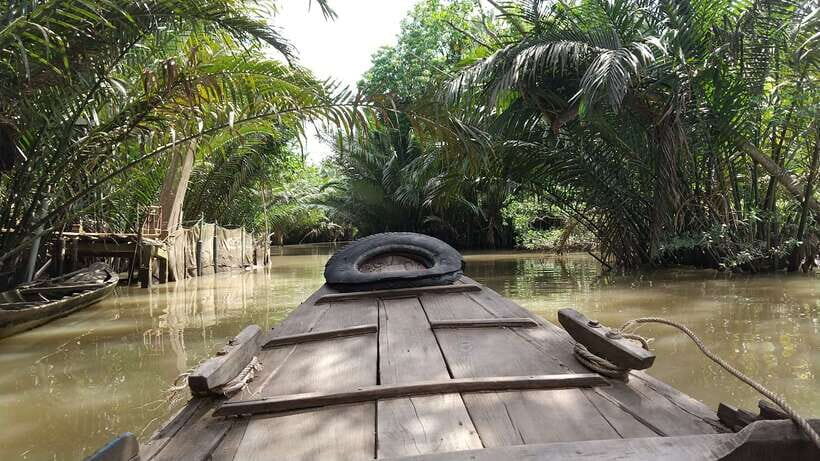
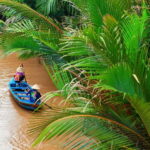
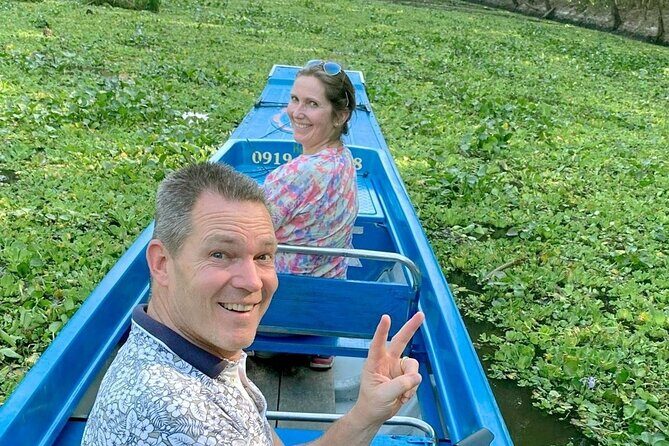
- Motorboat and hand-rowed boat trips
- A cooking class during the homestay experience
- Snacks like fruits, honey tea, and candy
- Breakfast and lunch included across the days
- Drinks: 2 bottles of 500ml per person
- Admission for the main sights
That last part matters. Many day-trip style options nickel-and-dime you with separate ticket lines and “local costs.” Here, most of the core admissions are covered.
One more detail: dress code is listed as smart casual, and comfortable walking shoes are recommended. That’s a good hint that you’ll do some walking at temples and nature areas, and you’ll want footwear that handles uneven ground.
Price and logistics: is $467 per person a smart value?
At $467 per person for 3 days, you’re paying for coordination: pickup and drop-off, a guide, boats, meals, and two nights of lodging (including a homestay). If you tried to assemble the same mix—market morning, forest bird sanctuary area, border-town viewpoints, and homestay cooking—you’d likely spend time and money on separate bookings.
Two practical points on value:
- You’re not paying only for sightseeing. You’re paying for the transitions—boats, transfers, and the places to sleep.
- The program includes multiple types of activities (temples, boats, markets, forest/nature, and a cooking class). That reduces the chance you’ll feel like you paid for one main stop and a bunch of driving.
The main “cost” you’ll pay is time and energy. This itinerary is active enough that you’ll want to travel light and plan for an early start on day 2.
Who should book this Mekong Delta tour, and who might want a different plan
I’d point you toward this tour if you:
- Want a first-timer-friendly introduction to the Mekong Delta
- Prefer a guide to handle logistics and timing
- Like a mix of culture (temples), food (set menu and homestay cooking), and water travel (floating market + boats)
You might consider a different plan if you:
- Hate early mornings
- Want total freedom to set your own pace, since the schedule is fixed
- Are extremely sensitive to long drives between regions (the day-to-day travel time is part of the deal)
Should you book this 3-day Mekong Delta tour from Ho Chi Minh City?
If you want to see a lot of the Mekong Delta without feeling like you’re doing a second job, this is a strong choice. The included homestay night with cooking class, the boat time (including hand-rowed), and the pair of nature and market stops make it more than a basic “get photos on a boat” program.
My advice: book it if you can commit to the schedule and the early start on day 2. If your travel style is slow-and-flexible only, then you might feel boxed in.
Also, this tour is commonly booked around 90 days in advance, so if your dates are fixed, don’t wait too long.
FAQ
FAQ
What time is pickup in Ho Chi Minh City?
Pickup is offered from several hotels, and you should be ready at 8:30 a.m. The listed meeting point start time is 8:00 a.m., so confirm which applies to your group.
How long is the Mekong Delta tour?
The duration is 3 days (approx.).
Do you include hotel pickup and drop-off?
Yes. Hotel pickup and drop-off are included.
Is the tour private or group-based?
It’s listed as private, meaning only your group participates.
What boat experiences are included?
The tour includes all boat trips, including motorboat and hand-rowed boat.
Are meals included?
Yes. Breakfast (2) and lunch (3) are included, and there are also snacks during the day.
Is there a cooking class?
Yes. There is a cooking class at a homestay.
Do you sleep at a homestay?
Yes. You get 1 night accommodation at a homestay (2 guests per room).
What are the two overnight options?
The tour includes 1 night at a homestay and 1 night at a 3-star hotel, each with 2 guests per room.
Are vegan or vegetarian options available?
Yes. Vegan and vegetarian options are available.
Do I need a passport?
Yes. A current valid passport is required on the day of travel.