REVIEW · HO CHI MINH CITY
Cu Chi Tunnels and Mekong Delta Full Day Tour
Book on GetYourGuide →Operated by GUU TRAVEL · Bookable on GetYourGuide
Tunnels underground, canals above: a long day worth it. You get the Cu Chi Tunnels in the morning, then head into the hand–rowing sapan pace after lunch in the Mekong Delta. I especially like the hands-on tunnel crawl and the way the Delta feels grounded in everyday life. One drawback to plan for: the schedule is tight, and the tunnels can feel very cramped and dark.
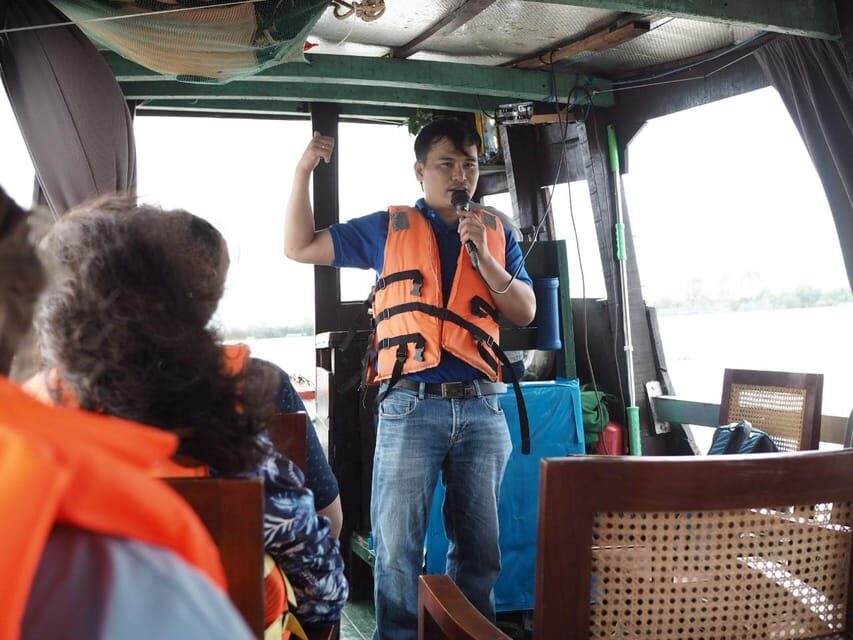
What makes this tour work is the small-group feel: you ride in a good quality AC 16-seat car with a maximum of 10 people, so you’re not stuck in a noisy cattle-car. Add a professional English-speaking guide and you get context that actually helps the sites make sense.
In This Review
- Key highlights you should care about
- Why this Cu Chi plus Mekong Delta combo feels like a good deal
- Cu Chi Tunnels: what you’ll see above ground before you go under
- Crawling the tunnels: the hands-on part that makes it real
- Secret refuge covers and trap areas: what the guide will help you notice
- Optional AK47 or MK16 shooting: fun if you’re prepared for the extra cost
- Lunch at Riverside restaurant: the Mekong break that actually fuels the afternoon
- Mekong Delta after lunch: rice fields, ducks, canals, and orchard time
- Don ca tai tu: the folk music moment you don’t want to rush
- Tien River cruise and the mythical islets of Dragon, Kirin, Tortoise, Phoenix
- Kirin islet, orchards, and fruit tasting: simple but memorable
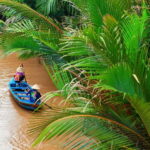
- Hand-rowed sapan, tuktuk rides, and a quiet village walk
- What $50 gets you, and what you should budget for
- Getting the most out of the day: practical tips for comfort and pacing
- Should you book Cu Chi Tunnels and Mekong Delta full day tour?
- FAQ
- How long is the Cu Chi Tunnels and Mekong Delta tour?
- What time do they pick you up in Ho Chi Minh City?
- Is pickup included from every district in Ho Chi Minh City?
- Is the tour available in English?
- What meals are included?
- Are entrance fees included?
- Can I shoot an AK47 or MK16, and does it cost extra?
Key highlights you should care about
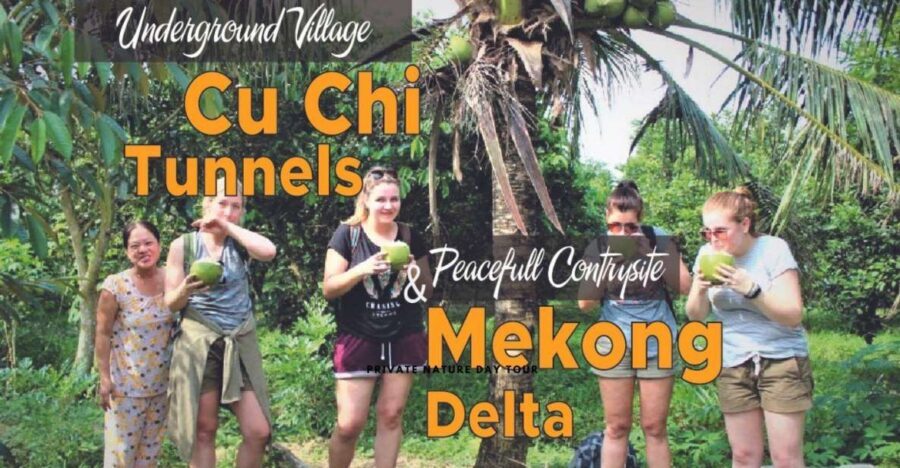
- Cu Chi crawl through tunnels made by hand on an underground network that stretches over 250 km
- War-era details explained clearly, including hidden refuge covers and trap areas
- Optional AK47 or MK16 shooting in a well supervised area, with a per-piece bullet fee
- UNESCO-listed Don ca tai tu folk music paired with fruit tasting and market stops
- Tien River cruise to mythical islets, with a visit to Kirin islet
- Hand-rowed sampan and a village walk that slow the day down before lunch
Why this Cu Chi plus Mekong Delta combo feels like a good deal
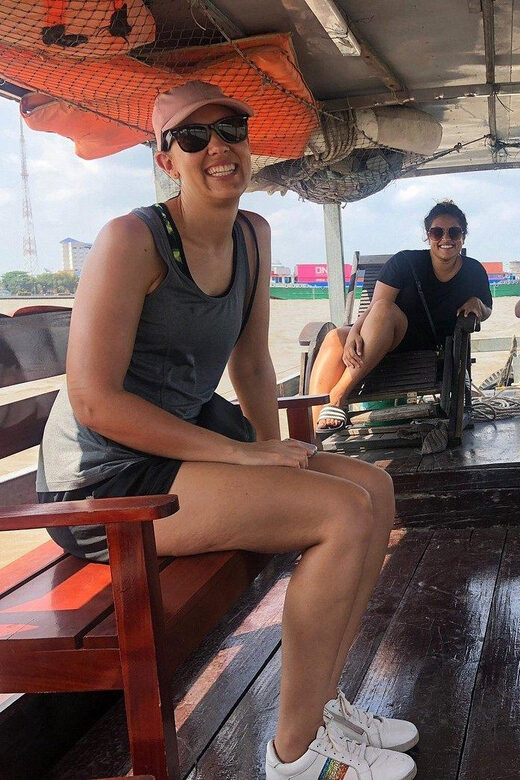
This is a smart one-day pairing. Ho Chi Minh City history hits hard at Cu Chi, then the Delta gives you green calm, river work, orchard life, and folk culture without needing another hotel night. You’re also not just “seeing” things—you get small sensory moments all day, like tapioca tea at Cu Chi and seasonal fruit in the Delta.
Value-wise, the price (about $50 per person) is easier to justify because you’re getting more than one attraction plus lunch in one package. Entrance fees, lunch at Riverside restaurant, bottled water, a light snack at Cu Chi, and tropical fruits at a local market are included, which reduces the little add-ons that can creep up fast.
The trade-off is time. You’ll move all day, so this works best when you’re okay with an active itinerary and don’t need long, slow breaks between stops.
Other Mekong Delta day trips we've reviewed
Cu Chi Tunnels: what you’ll see above ground before you go under

Cu Chi isn’t just a “war site.” It’s shown as a whole underground living system. You learn how the tunnels operated as a hiding place and battleground, but also as a safer long-term home, with areas like smoke-free kitchens, storage, handicraft and tailor stores, weapon factories, healthcare rooms, meeting rooms, and command centers.
Before you crawl, you’ll watch a short documentary about Cu Chi during the war, with options in many foreign languages. That’s useful because it gives you a baseline for the places you’ll later pass through—especially if you don’t know the layout and methods already.
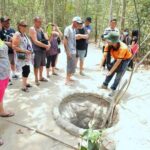
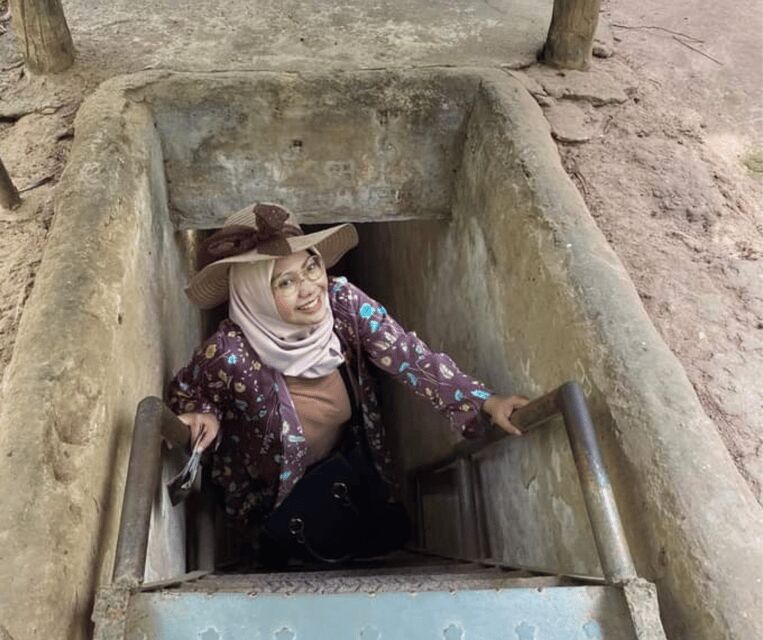
Then the tour brings you to the surface reminders of how people entered and survived underground. You’ll see the cover of a secret refuge and get a feel for how the network connects into a larger system, including thousands of tiny warming houses where families could live, raise kids, and even hold weddings.
Crawling the tunnels: the hands-on part that makes it real
The tunnel crawl is the moment that turns information into understanding. You go through narrow spaces that were made by hand, which instantly communicates how much effort went into building and maintaining the system.
Even if you know the history, your body gets a different kind of lesson here. The ceilings feel low, your movement is controlled by the tunnel space, and every turn makes you more aware of ventilation, lighting, and how people moved with limited room. Slow walking matters—think steady and careful.
A practical note: this part can be uncomfortable if you don’t like tight spaces. If you’re claustrophobic, this might not be your favorite section. If you’re fine with it, it’s also the part that most strongly connects you to what life would have demanded underground: patience, discipline, and constant alertness.
Secret refuge covers and trap areas: what the guide will help you notice
Cu Chi includes more than straight tunnel segments. You’ll also see areas tied to defense, including damaged self-construct traps and other war-time features.
What you’ll likely appreciate is how your guide ties these details to real situations—what the tunnels protected, how people avoided detection, and why certain spots mattered during conflict. The goal isn’t scare tactics. It’s to explain how the system functioned, from daily survival to tactical needs.
If you enjoy historical detail but still want it understandable, this is a strong format. You’re not just staring at holes in the ground. You’re learning how different features worked together as a network for people who had to keep operating even under extreme pressure.
Optional AK47 or MK16 shooting: fun if you’re prepared for the extra cost
One of the most talked-about add-ons here is the supervised shooting range, where you can try with AK47 or MK16 rifles. It’s described as optional and supervised, and there’s an extra bullet fee of about $2 per piece.
Two things to keep in mind:
- Budget the shooting cost separately. If you don’t shoot, you don’t pay this. If you do, it adds up based on how many rounds you choose.
- Use your judgment on comfort and emotions. This is a war-related activity, so if you prefer to keep the day strictly educational and reflective, skip it.
If you do shoot, you’re likely to feel the novelty right away—then you’ll remember that the whole point of Cu Chi is how weapons and tactics connected to everyday survival underground. That contrast is part of the impact.
Other Cu Chi Tunnels & Mekong Delta combo tours we've reviewed


Lunch at Riverside restaurant: the Mekong break that actually fuels the afternoon
After Cu Chi, lunch is at Riverside restaurant. This is a real recharge point rather than a rushed stop, because you’ll head back out right after.
The included meal is listed as famous Mekong specialties, including deep-fried giant gourami, spring rolls, and a giant fried sticky rice ball. You also get bottled water with lunch.
Even if you’re not a foodie, I like this lunch plan because it ties the Delta to the food people actually cook and sell. Giant gourami shows up as a signature Delta ingredient, and fried dishes make sense for a region where you want hearty, shareable meals after a full morning.
Mekong Delta after lunch: rice fields, ducks, canals, and orchard time
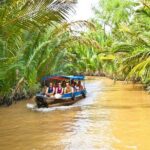
The Mekong Delta portion focuses on local scenery and agricultural life. You’ll see rice fields, ducks, buffalo alongside the road, nipa palm canals, and gardens filled with coconut and orchard crops.
The tour also includes multiple small cultural stops that keep the day from feeling like a single long boat trip. You’ll taste local-made candy, listen to traditional folk music, and spend time with tropical fruits at a local market.
This section is often what people want after the intensity of Cu Chi. It’s not just “pretty nature.” It’s daily work, food, music, and transport methods that show how life fits into the river system.
Don ca tai tu: the folk music moment you don’t want to rush
One standout cultural piece here is Don ca tai tu, traditional Southern folk music. It’s recognized by UNESCO as an Intangible Cultural Heritage of Humanity, and the tour gives you a chance to experience it as part of the day rather than as a quick performance.
I like that it’s paired with other Delta tastes and sights. When the music happens alongside fruit and market time, it feels like a living tradition instead of a museum stop.
If you’re the type who enjoys culture that’s tied to everyday routines, this is a good match. It helps you understand why the Delta isn’t only about waterways—it’s also about identity.
Tien River cruise and the mythical islets of Dragon, Kirin, Tortoise, Phoenix
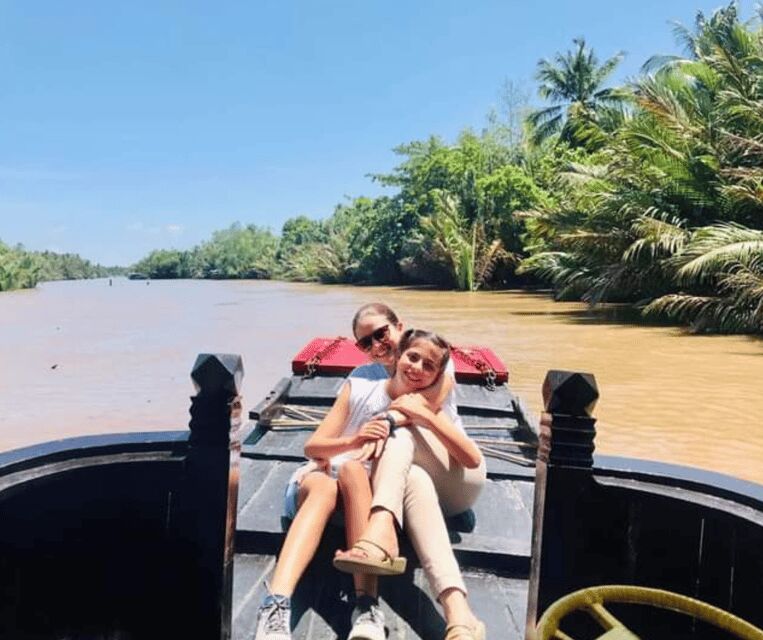
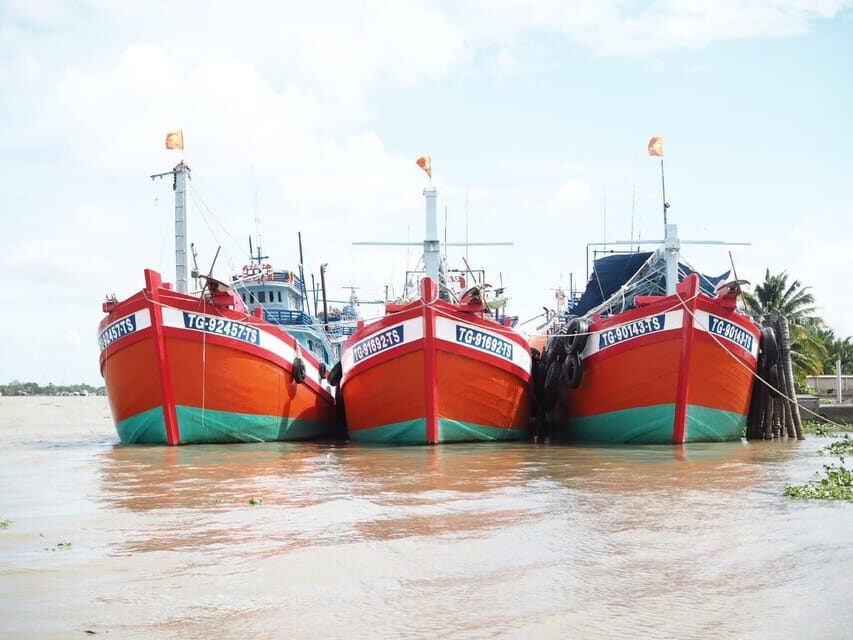
Next you get onto the Tien River for a cruise. This is where the day shifts into movement, and it’s also where you see fisherman’s ports.
You’ll learn about four islets represented by mythical animals: Dragon, Kirin, Tortoise, and Phoenix. Then the tour takes you to Kirin islet for the main activities.
Cruise time is valuable because it gives you a different perspective than roads and paths. You see how water supports farming and fishing livelihoods, and you get that sense of a region organized around canals and river routes.
Kirin islet, orchards, and fruit tasting: simple but memorable
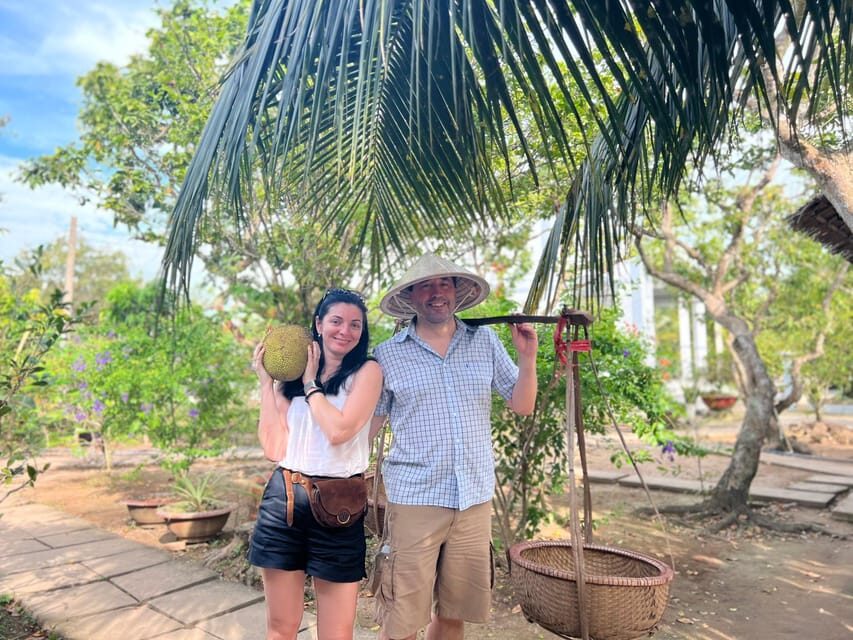
After the cruise segment, you’ll walk through orchard gardens and taste fresh seasonal tropical fruits. That’s one of those “small” inclusions that turns into a highlight because the fruit is usually best when it’s local and seasonal, and you’re not doing it in a hurry.
If you’re the kind of traveler who likes practical sampling, this works. You can try multiple fruits rather than betting everything on one dish at one restaurant.
It’s also a nice tempo shift. After the tunnel crawl, your body and brain are tired. Orchards give you shade, space to walk, and a break from intense historic context.
Hand-rowed sapan, tuktuk rides, and a quiet village walk
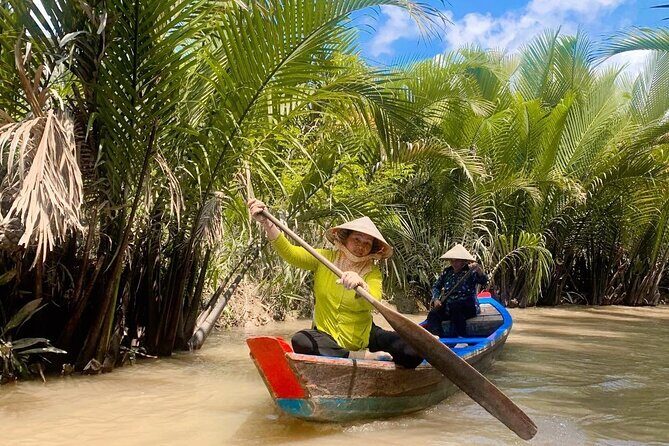
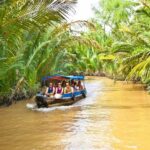
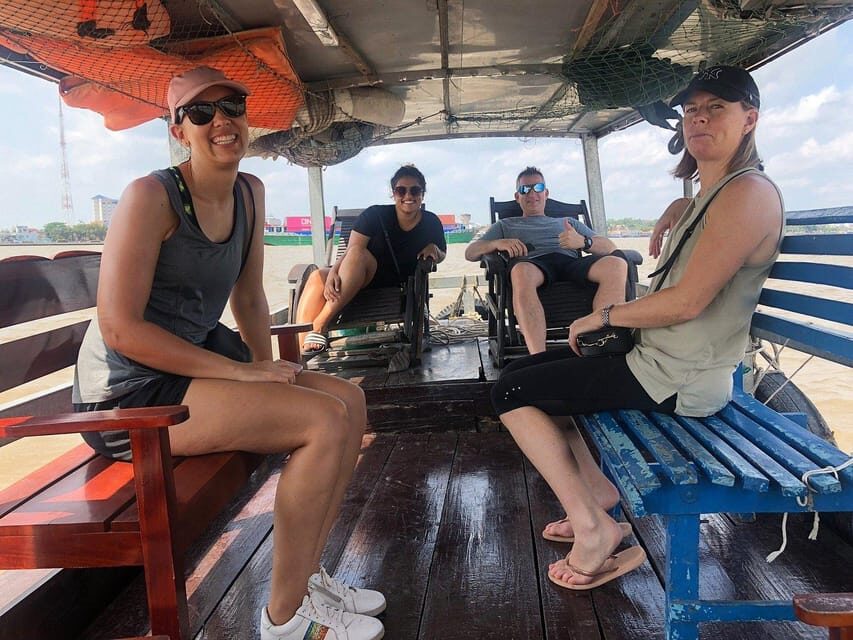
This tour adds variety to the transport style in the Delta. You’ll hop on a tuktuk at one point, then relax on the hand–rowing sampan.
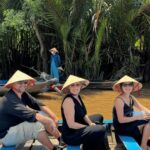
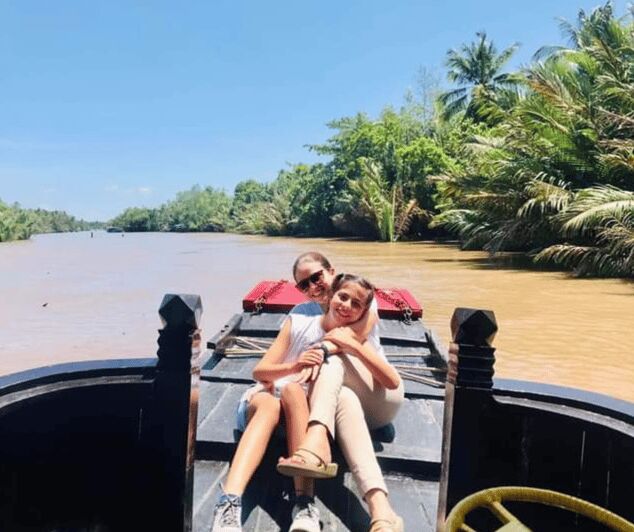
That hand-rowed part is exactly why I like this itinerary. It’s slow enough for you to look around, and it feels tied to older ways of moving through the canals. It also pairs well with a later short walk through a quiet village, which helps you feel the countryside atmosphere before lunch wraps up the experience.
There’s a lesson in the calm here. The Delta isn’t only fast river traffic. It’s also quiet travel, small routines, and community life. This section helps balance the day emotionally after Cu Chi.
What $50 gets you, and what you should budget for
At around $50 per person, this tour is positioned as a package with the “big obvious costs” already covered. Included items are entrance fees, a light snack with tapioca and tea at Cu Chi, tropical fruits at a local market, lunch at Riverside restaurant, bottled water, and pickup/drop-off.
It’s also small-group friendly. You’re not packed into a large bus, and the AC car helps a lot in southern Vietnam heat.
Two extra costs to remember:
- Shooting range bullets if you choose AK47 or MK16 (about $2 per piece)
- Pickup if you’re outside District 1, 3, or 4 (a surcharge of $8 for the group for 2 ways)
If you like predictability in your travel budget, this package makes it easier because most of your day’s costs are known upfront.
Getting the most out of the day: practical tips for comfort and pacing
This full-day tour is active, so you’ll get more out of it if you plan for comfort.
- Wear closed-toe shoes for Cu Chi tunnels and village walking. You want grip and protection.
- Expect tight spaces underground, so keep your mindset calm and patient for the crawl part.
- Bring a light layer and stay hydrated. You’ll have bottled water with lunch, but you’ll still want to manage your own comfort.
- If you’re sensitive to long transport, mentally break the day into two halves: Cu Chi in the morning, then the Delta culture and river time after lunch.
Also, keep your camera ready for the Delta fruit colors, canals, and river views. In the tunnels, photography rules can vary by area, so focus on listening and watching the guide’s cues first.
Should you book Cu Chi Tunnels and Mekong Delta full day tour?
I’d book this when you want a one-day package that hits both extremes: a serious Vietnam War underground experience and a calmer Mekong Delta day with culture, music, and food. The small max-group size, the English-speaking guide, and the fact that lunch plus entrance fees are included make it a practical value play.
Skip it or think twice if you know you won’t enjoy tight, dark tunnel spaces. And if you’re not interested in the optional rifle shooting, you can still enjoy the day fully—just be aware of the separate bullet fee if you change your mind on-site.
If you’re aiming for a day that’s educational, varied, and well-run, this is a solid pick.
FAQ
How long is the Cu Chi Tunnels and Mekong Delta tour?
It’s a 1-day tour. Check availability to see starting times.
What time do they pick you up in Ho Chi Minh City?
Hotel pickups start about 30–60 minutes before the tour start time, and you’ll get the exact pickup time after reconfirmation.
Is pickup included from every district in Ho Chi Minh City?
Free pickup is available from hotels in District 1, 3, and 4. Other districts have a surcharge of $8 per group for 2 ways.
Is the tour available in English?
Yes. The tour includes a professional English-speaking tour guide.
What meals are included?
Lunch is included at Riverside restaurant, plus bottled water. There’s also a light snack at Cu Chi with tapioca and tea.
Are entrance fees included?
Yes. Entrance fees are included.
Can I shoot an AK47 or MK16, and does it cost extra?
Shooting is optional in a well supervised area. There’s a separate bullet fee at the shooting range of about $2 per piece.